
🔋 ZOUPW. Sourced under PartnerBoost Campaign
Off-Grid Power Matching: Choosing the Right ZOUPW Solar Panel for Your Setup
Last updated: June 2026. This article is reviewed quarterly.
A mismatch between your battery capacity and solar input will lead to dead devices or fried controller boxes. We compared four portable panels to show how busbar alignment and cell chemistry determine charging speeds in changing light.
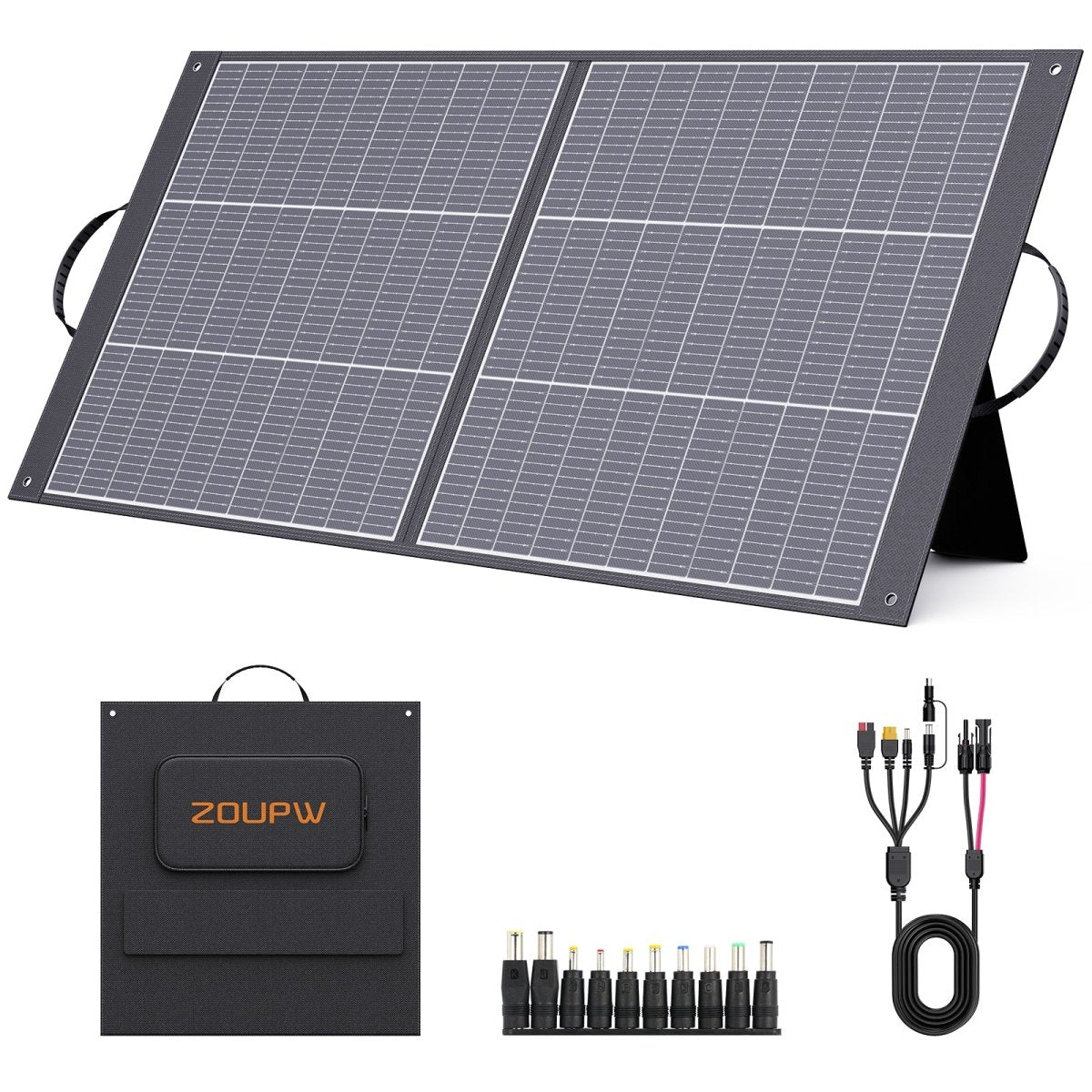
ZOUPW 100W Lightweight (16BB)
- Weights just 7.98 lbs, making it 30% lighter than standard 100W panels.
- Upgraded 16 busbars (16BB) design lowers internal resistance.
- Advanced N-Type monocrystalline cells reach 25% efficiency.
- Equipped with direct USB-C and USB-A fast charging ports.
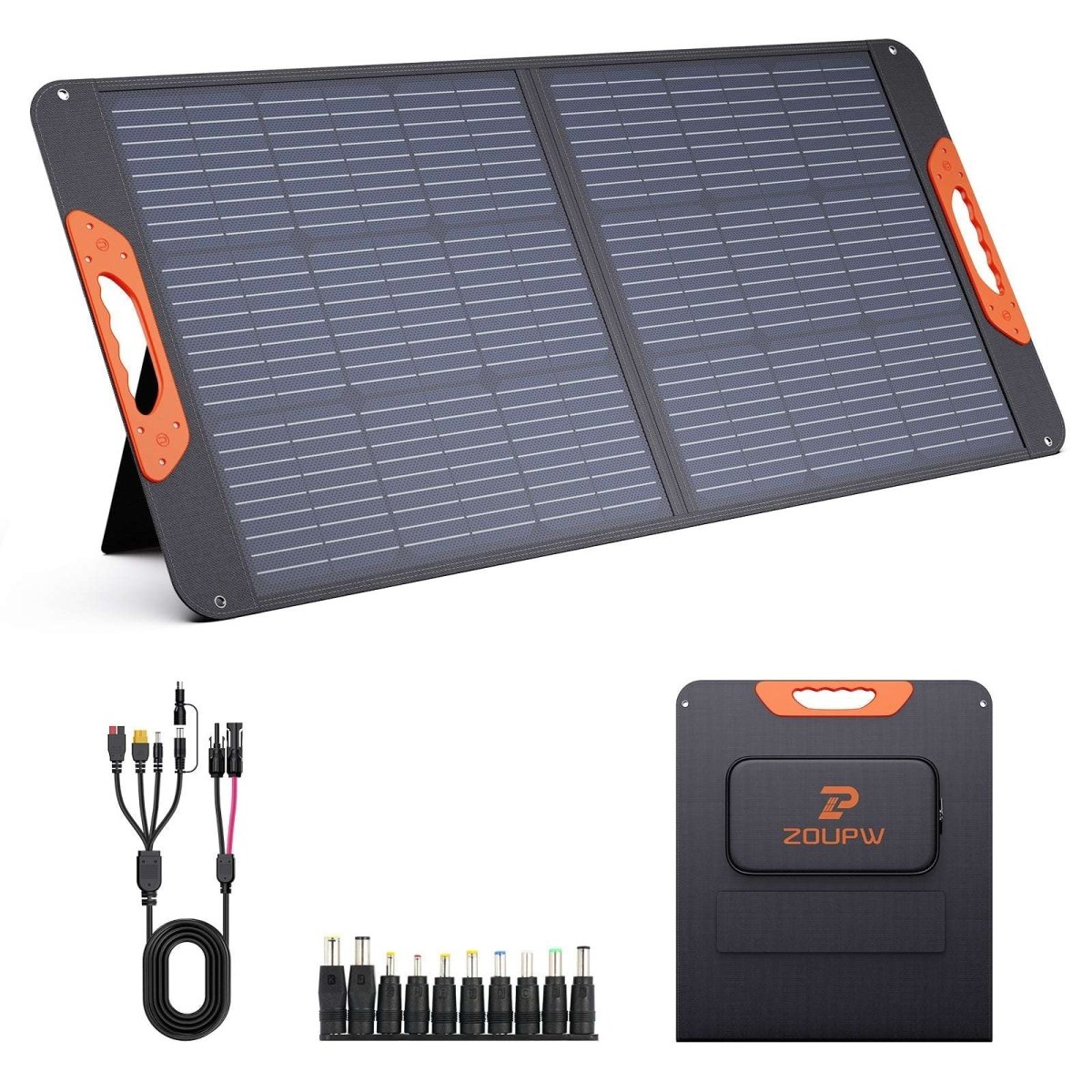
ZOUPW 100W Standard Portable
- A+ monocrystalline cells provide 23.5% conversion efficiency.
- ETFE protective coating provides dustproof, long-term durability.
- Features a protective pocket housing the control box.
- Weights 9.48 lbs with magnetic handle for rapid folding.
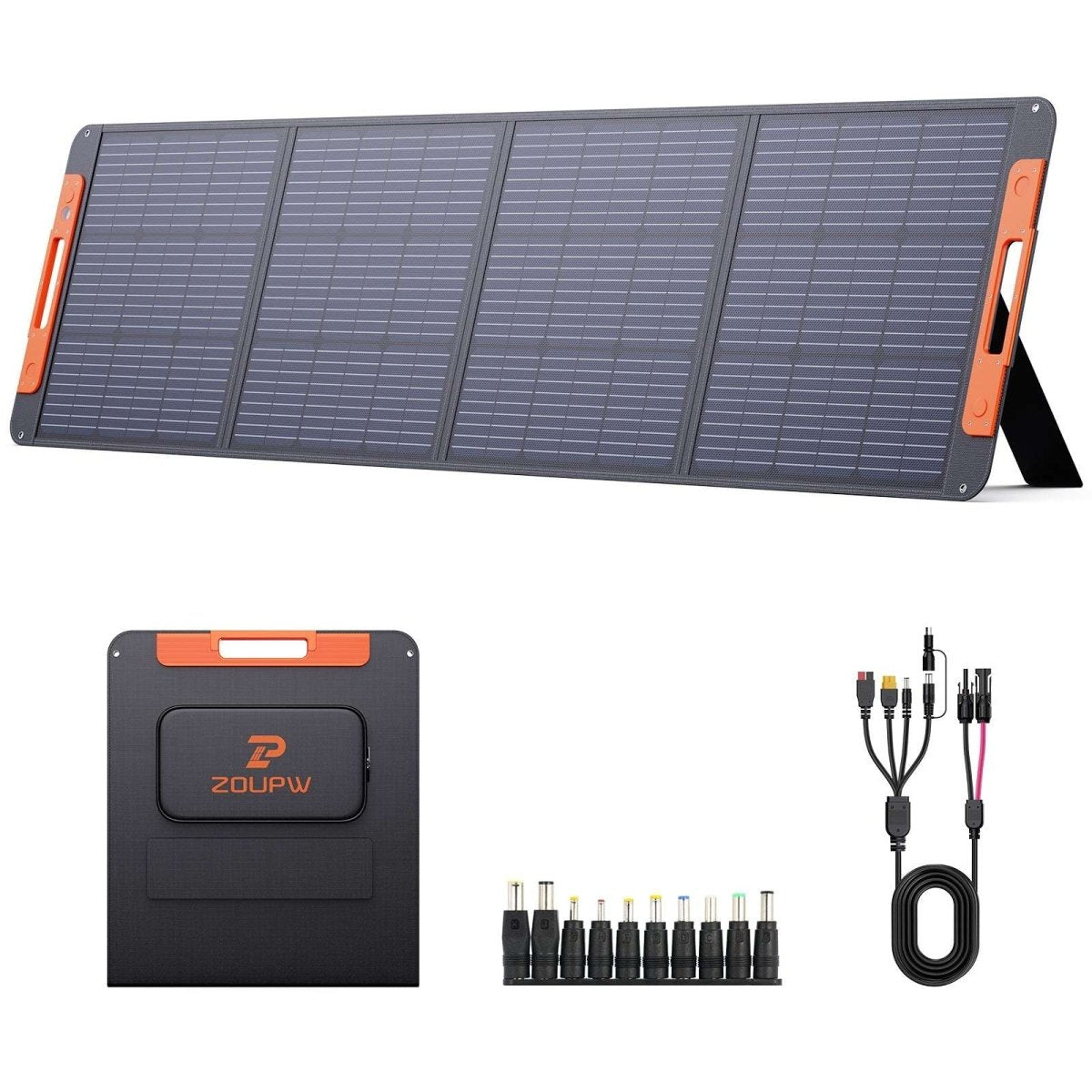
ZOUPW 200W (with Angle Guide)
- Integrated Solar Angle Guide ensures optimal 90° sun placement.
- Supports series and parallel connections for faster charging.
- Four adjustable kickstands set up on uneven terrain in ten seconds.
- Four mounting holes allow clean attachment to RV roofs.
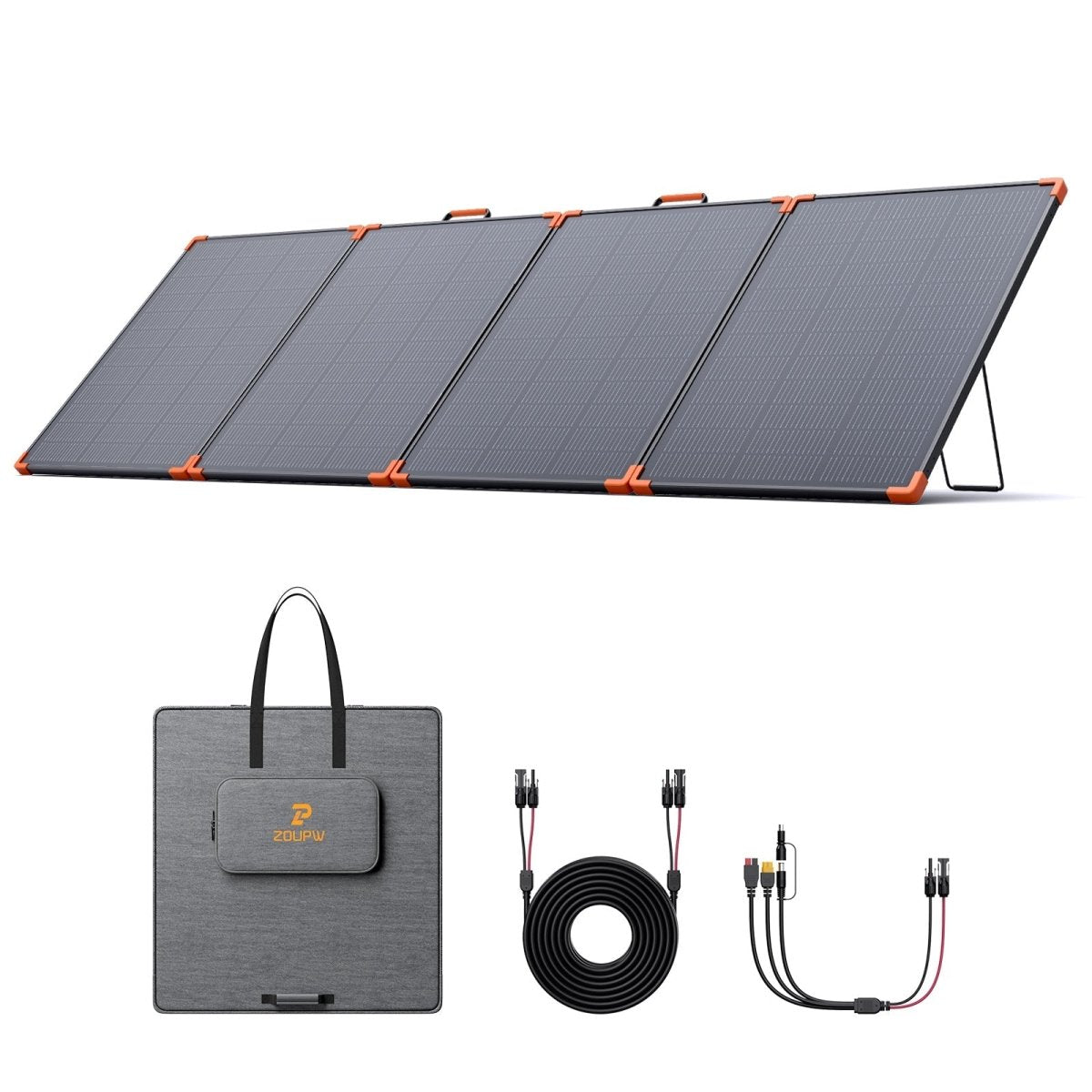
ZOUPW 350W Foldable (IP68)
- Maximum 350W output charging high-capacity power stations.
- IP68 dust and waterproof rating survives heavy rainstorms.
- N-Type 16BB cell architecture delivers up to 25% efficiency.
- Hinges reinforced with PC material withstand 5,000 folds.
Technical Specification Matrix
Compare the cell chemistry, weight limits, and waterproof ratings to match your gear.
| Specification | 100W Lightweight | 100W Standard | 200W Solar Guide | 350W IP68 Heavy Duty |
|---|---|---|---|---|
| Cell Architecture | N-Type 16 Busbar (16BB) | A+ Monocrystalline | A+ Monocrystalline | N-Type 16 Busbar (16BB) |
| Conversion Rate | Up to 25.0% | Up to 23.5% | Up to 23.5% | Up to 25.0% |
| Physical Weight | 7.98 lbs (Ultralight) | 9.48 lbs | 18.96 lbs | Heavy (Large footprint) |
| Waterproof Grade | IP67 Weatherproof | IP67 Weatherproof | IP67 Weatherproof | IP68 Waterproof |
| Output Ports | USB-A (Orange), USB-C | USB-A (Dual), USB-C | Dual USB-A, Type-C | MC4 direct output |
| Angle Optimization | Manual kickstands | Manual kickstands | Integrated Dial Guide | Reinforced multi-kickstands |
Understanding Busbar Count (16BB vs 9BB)
Traditional solar panels utilize 9 busbars (the thin metallic lines running across each cell) to gather current. ZOUPW’s upgraded 100W Lightweight and 350W panels use a 16-busbar (16BB) configuration. By reducing the physical distance that electrons must travel to reach the circuit, the design lowers internal resistance and curtails energy loss. Under partial tree shade or morning haze, this layout delivers more stable electricity than standard monocrystalline structures.
Waterproofing: IP67 vs. IP68 Standards
While standard panels use ETFE coatings rated at IP67 (allowing brief exposure to splash and light rain), the 350W model utilizes an IP68 layout. This protects the silicon layers against prolonged storms and mud exposure during heavy off-grid use. It is critical to note that the control boxes housing the USB ports are not waterproof across any model. When using USB ports, keep the control box tucked inside the protective pocket away from pooling water.
Frequently Asked Solar Questions
Answers to common compatibility and charging inquiries.
Can these panels store electricity directly?
No, portable solar panels do not contain storage cells. They convert sunlight into current which must be routed immediately to an external battery, portable power station, or smartphone. Keep your battery unit in the shade while charging to avoid high-temperature shutoff.
What is the advantage of a Solar Angle Guide?
Solar panels capture maximum energy when sunbeams hit the surface at a perpendicular 90° angle. The Solar Angle Guide on the 200W model lets you align the shadow of a center pin to the target marker, ensuring optimal tilt without guessing.
How do I connect multiple panels in series or parallel?
You can connect multiple 200W panels using standard connectors. Series connections increase output voltage while keeping the current constant, matching higher-input generators. Parallel connections increase the current, which accelerates charging for large battery packs.
Why does my power station limit charging speeds?
Some small power stations have a maximum input limit (such as 42W for a Jackery Explorer 160). Even if you connect a 100W panel in perfect sunlight, the station will cap the intake at its physical limit. Always check your station specs before matching panels.
Can the 200W solar panel charge a portable power station directly, or do I need a separate charge controller?
Hey Justin! The panel has standard MC4 connectors. Most modern power stations have built-in MPPT controllers, so you can plug it directly using an MC4-to-XT60 or MC4-to-DC8mm cable.