
Disclosure: This post may contain affiliate links. We earn a small commission if you purchase through our links, at no extra cost to you. We only recommend products we genuinely believe in.
When you first see a levitating moon lamp online, it feels like a trick. A detailed, glowing miniature moon floating and spinning silently in mid-air looks too good to be true. But after seeing them all over social media, I decided to test one myself.
I replaced my standard bedside reading lamp with a premium 3D-printed levitating moon lamp for 30 days. I wanted to see if it was a durable, functional piece of lighting or just a short-lived desktop gimmick.
Here is my honest, hands-on review after a month of daily use.
—
The Setup: A Test of Patience
Let’s get the hardest part out of the way first. Setting up a levitating moon lamp is not as simple as plugging it in. Because it relies on opposing electromagnetic forces, you must place the globe exactly at the balance point (the “sweet spot”) above the base.
The first time I tried, it was intensely frustrating. The magnets are incredibly strong; if you are slightly off-center, the base will violently suck the moon down with a loud clack, or push it off to the side.
My Tips for Success:
* Hold the moon with both hands.
* Lower it slowly from directly above the base.
* Keep your fingers under the moon to prevent it from slamming into the wooden base.
* Look for the moment you feel the pull become neutral—like it is floating in thick syrup.
It took me 7 attempts on day one to get it to float. By day 30, I could do it on the first or second try. It takes muscle memory, but once you get it, the setup is no longer an issue.
—
1. Aesthetic and Build Quality
The model I tested featured a wooden base made of dark walnut veneer and a 3D-printed moon sphere measuring 5.9 inches in diameter.
* The Base: Feels sturdy and heavy enough to anchor the strong magnets inside. The walnut wood look matches modern, rustic, or minimalist nightstands beautifully.
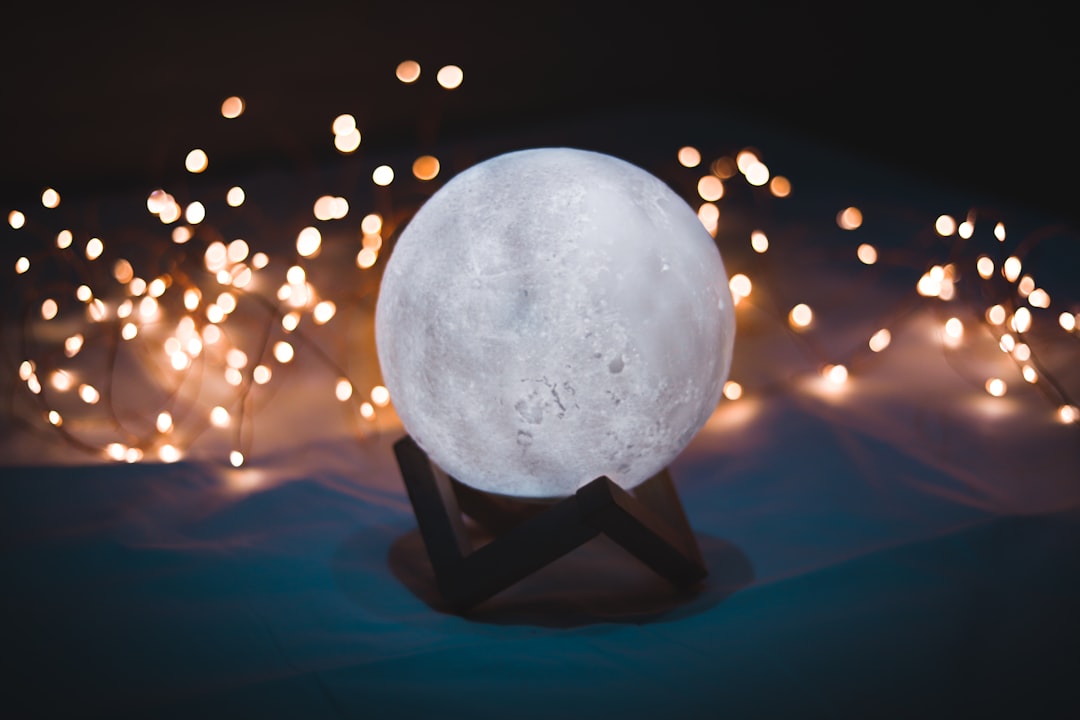
* The Moon: The 3D printing is exceptionally detailed. When unlit, it looks like a grey, cratered plaster sphere. But when lit, the different layers of thickness create a beautiful, highly realistic representation of the lunar topography.
—
2. Lighting Performance and Wireless Power
The light is powered wirelessly via induction technology from the base. This means there are no batteries inside the moon that need charging.
The lamp offers three light modes, toggled by tapping the power symbol on the wooden base:
1. Warm Yellow (2700K): My favorite. It casts a soft, orange-hued light that is perfect for late-night wind-downs. It is not bright enough to read by, but it creates a beautiful, relaxing glow.
2. Warm White (3500K): Slightly brighter. This is perfect for reading in bed without straining your eyes.
3. Cool White (5000K): High contrast. This makes the craters and details pop, but it feels a bit too bright for a cozy bedroom setting.
—
3. Daily Usability: What Happens During a Power Cut?
One question I had before testing was: What happens if the power goes out? Since the electromagnets require constant electricity to keep the moon floating, a power cut could send the globe crashing down.
Fortunately, modern levitating moon lamps have a built-in safety feature. When the power is cut, the electromagnetic field collapses instantly, and the strong permanent magnets inside the base pull the moon globe down, locking it securely to the center of the base. It does not roll off the table.
Furthermore, the rotation is completely silent. I am a very light sleeper, and I did not hear a single click, hum, or buzz from the motor during my 30-day test.
—
Levitating Moon Lamp: Pros & Cons
The Pros:
* Stunning Visual Appeal: It is a beautiful piece of art that instantly upgrades the look of any room.
* Hypnotic & Calming: The slow, silent rotation is incredibly relaxing to watch.
* Soothing Light Modes: The warm yellow light is the perfect, melatonin-friendly nightlight.
* Silent Operation: Zero electrical hum or mechanical noise.
The Cons:
* Learning Curve: Can be frustrating to balance the first few times.
* Not a Main Light Source: It is strictly ambient; you cannot light up an entire room with it.
—
The Final Verdict: Is It Worth It?
After 30 days of daily use, I can confidently say that the levitating moon lamp is worth the investment—provided you buy a high-quality model (expect to pay between $80 and $120).
It is not just a gimmick that sits unused; it became my primary evening light source. If you want to create a peaceful, modern bedroom sanctuary, or are looking for a unique gift that will genuinely wow someone, this is the ultimate piece of ambient decor.
Does it make any high-pitched humming sound at night? I’m extremely sensitive to noise when sleeping.
Hi Samantha! I’m a light sleeper too and had the same worry. The induction power transfer is completely silent. There is no humming or buzzing whatsoever!