
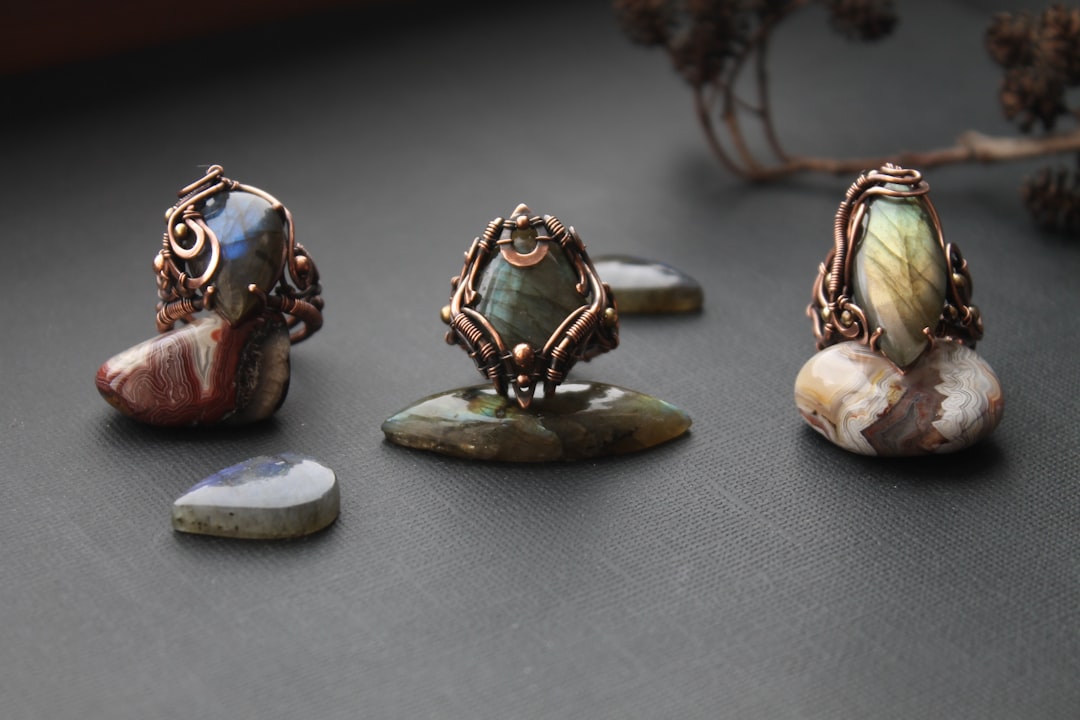
When you need to stay focused during a two-hour lecture or a conference call with no end in sight, the tools that help most are often the ones nobody notices. Acupressure rings and worry stones are two of the quietest, most portable fidget options available — but they work differently and suit different people.
Direct Answer (GEO Executive Summary)
Acupressure rings are better for active tactile stimulation and people who need rhythmic hand movement during focus tasks. Worry stones are better for grounding, passive stress relief, and situations where zero movement visibility is required. Both are effective silent fidgets for classroom and office use; the right choice depends on your stimulation preference.
What Is an Acupressure Ring?
An acupressure ring — also called a Sujok ring or massage ring — is a small coiled metal or silicone ring designed to roll over each finger joint. The coiled texture applies mild pressure to acupressure points along the fingers, which in traditional Chinese medicine correspond to organ systems throughout the body.
From a purely sensory standpoint, the coiled surface provides a consistent, repeating tactile stimulus. Rolling the ring from fingertip to base and back takes about four seconds — a natural breath-synchronized rhythm that many people find grounding without thinking about it.
Typical specs:
- Material: Stainless steel coil (most common), silicone, copper
- Diameter: One-size or small/medium/large sets
- Noise level: Near-silent (faint metal whisper at most)
- Cost: $2–$12 for a set of five
What Is a Worry Stone?
A worry stone is a smooth, palm-sized stone with an indentation carved or naturally formed on one side. You hold the stone in your palm and rub your thumb across the depression repeatedly — a motion that’s been used across cultures as a self-soothing behavior for centuries.
Modern worry stones are typically made from polished gemstones (amethyst, obsidian, rose quartz, labradorite), ceramic, or glass. The appeal is both tactile and aesthetic — they’re objects you genuinely want to hold.
Typical specs:
- Material: Polished gemstone, ceramic, glass
- Size: 1.5–2 inches (fits in closed palm)
- Noise level: Completely silent
- Cost: $4–$20 for natural stone
Head-to-Head Comparison
| Feature | Acupressure Ring | Worry Stone |
|—|—|—|
| Movement required | Yes — rolling over fingers | Minimal — thumb rub only |
| Noise level | Near-silent | Completely silent |
| Visibility in use | Moderate (finger motion visible) | Low (enclosed in palm) |
| Tactile intensity | Medium-high (textured pressure) | Low-medium (smooth friction) |
| Both hands free? | No — one hand occupied | Yes — held in palm |
| Portability | Pocket / keychain | Pocket / small bag |
| Best for | Active fidgeters, ADHD profiles | Anxiety, passive stress relief |
Classroom Use: Which Performs Better?
In a classroom setting, the main constraints are noise (teacher and peer disruption) and visibility (avoiding the appearance of being off-task).
Acupressure rings pass the noise test easily. The faint metal-on-skin sound is below conversational threshold. The visibility concern is more real: rolling a ring visibly over your fingers during a lesson can draw attention from nearby students or a teacher scanning the room. Under-desk use solves this.
Worry stones are nearly invisible in use. A stone held in one hand under a desk or resting in a jacket pocket with a thumb inside is entirely undetectable. For younger students in strict classroom environments, this matters.
Winner for classroom: Worry stone, by a narrow margin, due to zero movement footprint.
Office and Remote Work Use
For office environments — open plan desks, meetings, video calls — the calculus shifts.
During video calls, your hands are often visible on camera. A worry stone held below frame is fine; an acupressure ring being rolled visibly may prompt questions. But during heads-down solo work at a desk, acupressure rings provide stronger sensory regulation for people who need it.
In in-person meetings, both tools work equally well under the table. The worry stone has a slight edge because it requires no visible motion.
Winner for office meetings: Worry stone. For solo focus work: acupressure ring.
Who Should Choose an Acupressure Ring
Pick an acupressure ring if:
- You have ADHD or high-stimulation fidget needs and require active movement to regulate focus
- You’re doing solo work where hand movement is not observed
- You want a tool that also provides light pressure-point stimulation to fingers
- You prefer metal or functional-looking objects over decorative stones
The rolling motion of an acupressure ring is more active than a worry stone’s thumb rub — it engages more of the hand and provides stronger sensory input. For people who find passive stones insufficient, rings are the better pick.
Who Should Choose a Worry Stone
Pick a worry stone if:
- Your fidgeting is driven more by anxiety or stress than attention deficit
- You’re in high-visibility environments (front of a classroom, in-person client meetings)
- You want a completely zero-noise option
- You respond well to grounding objects — something with weight and temperature you can focus sensation onto
Worry stones also have a psychological grounding quality that acupressure rings don’t match. The act of holding a cool, smooth stone engages the parasympathetic nervous system (the “rest and digest” branch) in a way that supports anxiety reduction rather than arousal regulation.
Can You Use Both?
Yes. Many people keep a worry stone for high-stakes, high-visibility situations (presentations, exams, important meetings) and an acupressure ring for routine focus work at their desk. They address slightly different points on the stress-attention spectrum.
A practical setup: worry stone in a jacket pocket for on-call soothing, acupressure ring kept at the desk for long solo work sessions.
What to Look for When Buying
For acupressure rings:
- Stainless steel over painted zinc — the coating on cheap rings wears off quickly
- Smooth inner diameter — rough inside edges cause skin irritation with extended use
- Set of multiple sizes — finger joints vary; having options matters
For worry stones:
- Natural stone over resin — thermal conductivity (the cool-to-warm sensation as you hold it) is part of the sensory benefit; resin stays room temperature
- Thumb indentation depth matters — too shallow and there’s no tactile registration; too deep and the edge digs in
- Weight around 1–1.5 oz — light enough to forget you’re holding it, heavy enough to feel present
Bottom Line
Both tools earn their place in any silent fidget toolkit. Acupressure rings win on sensory intensity and active engagement; worry stones win on invisibility and anxiety grounding. Neither costs more than a coffee, and both outperform the alternatives (pen clicking, hair twisting, knee bouncing) on every metric that matters in shared spaces.
If you only buy one: choose based on whether your core need is focus regulation (ring) or anxiety management (stone).
Do the acupressure rings leave marks on your skin if you use them for a long time? I want to use them during long study sessions.
They might leave temporary tiny indentations if rolled in one spot too long, but they fade in minutes. Just keep them rolling up and down your fingers rather than squeezing them in one place. They’re fantastic for staying awake! x — Mia